
-
Pdiam
- Social Psychology
- 0 Comments
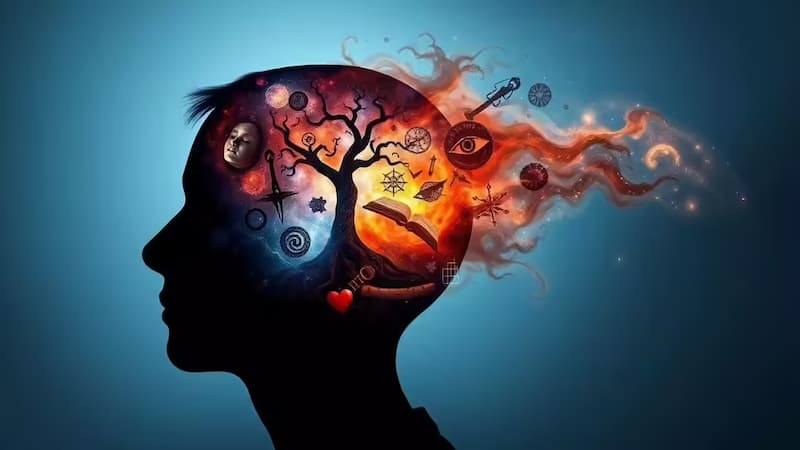
We like to think we are the CEOs of our own lives—rational, deliberate, and in total control. But psychology suggests otherwise. In reality, our conscious mind is more like a spokesperson for a hidden government: the subconscious.
Human behavior is driven by a complex web of evolutionary “shortcuts” and psychological glitches that influence everything from who we fall in love with to why we buy things we don’t need. These aren’t just “quirks”; they are deeply embedded scripts that have helped our species survive for millennia.
Let’s peel back the curtain on some of the strangest psychological phenomena that dictate your daily life.
1. The “Doorway Effect”: Why You Forgot Why You Entered the Room
We’ve all done it. You walk from the living room into the kitchen with a clear purpose, only to stand in front of the fridge wondering what on earth you were looking for.
This is a recognized psychological phenomenon known as the Event Boundary. Your brain perceives a doorway as a “file break.” When you move from one environment to another, the brain “archives” the thoughts from the previous room to make space for the new context. It’s essentially a mental reset button that accidentally deletes your “to-do” list in the process.
2. The Baader-Meinhof Phenomenon (Frequency Illusion)
Have you ever learned a new, obscure word or bought a specific model of car, only to start seeing it everywhere the very next day? No, the world isn’t glitched—you’re experiencing the Frequency Illusion.
Once your brain is “primed” with new information, your selective attention kicks in. Your subconscious starts filtering for that specific data point, making it feel like a cosmic coincidence when it’s actually just your brain finally noticing what was already there.
3. Why We Love “The Underdog” (The Psychology of Social Friction)
There is a reason why the most viral short films and movies often feature a “status reversal”—where a victim overcomes a bully or a hidden heir takes their throne.
The Schadenfreude and Justice Loop
Humans have a biological craving for “moral equilibrium.” When we see someone in a high-status position acting unfairly, it creates psychological tension. When that person is finally brought down (especially by someone they underestimated), our brain releases a massive hit of dopamine. This is why “Karma” videos and dramatic social friction stories are the highest-retention content on the internet. We are literally addicted to seeing the scales of justice balanced.
4. The Ben Franklin Effect: How to Make Someone Like You
Counterintuitively, if you want someone to like you, you shouldn’t do them a favor—you should ask them for one.
When someone does a favor for you, their brain experiences a moment of cognitive dissonance: “Why am I helping this person? I must like them.” To justify their own behavior, their subconscious mind creates a positive affinity for you. It’s a powerful tool for social bonding and influence.

The “Social Content” Connection: Why We Can’t Stop Watching
In the world of social media and video content, creators use these psychology facts as “hooks.” High-retention videos often leverage:
- The Zeigarnik Effect: Our brain’s tendency to remember uncompleted tasks better than completed ones. This is why “Wait for it…” captions or cliffhangers are so effective.
- Mirror Neurons: When we watch someone eat something delicious or experience a “jump scare,” our brain fires as if we are experiencing it ourselves.
Understanding these triggers doesn’t just make you smarter—it makes you a more conscious consumer (and a more powerful creator) of the digital world.
See the Psychology in Action
Want to see how these psychological “glitches” can be used to influence behavior in real-time? We’ve analyzed the most viral social experiments of the year to show you exactly how the human mind can be “hacked.”
FAQ: Deep Dives into Human Behavior
Q: Can we actually “reprogram” our subconscious mind?
While you can’t “delete” evolutionary instincts, through Neuroplasticity and cognitive behavioral techniques, you can build new neural pathways. Consistent habits and “interrupting” your automatic thoughts can shift your behavior over time.
Q: Why do we feel more “lonely” in a crowd?
This is the Bystander Effect combined with social diffusion. In a large group, our sense of individual responsibility decreases. We look to others to see how to react, and if everyone else looks calm, we assume there is no reason for connection, leading to a feeling of isolation.
Q: Is “Gut Feeling” a real psychological thing?
Yes. It is often referred to as Intuitive Cognition. Your subconscious processes millions of data points per second—far more than your conscious mind can handle. A “gut feeling” is often your brain recognizing a pattern that your conscious mind hasn’t caught up to yet.
Q: Why is “negative” news more addictive than positive news?
Humans have a Negativity Bias. Evolutionarily, it was more important to remember where the predator was than where the pretty flowers were. Our brains are still wired to prioritize “threats,” making dramatic or high-friction content much harder to scroll past.